An athlete's financial future also requires training
Concentrated earnings, short careers, and complex transitions. An athlete's financial future demands structure, planning, and long-term vision.

Financial planning for an athlete involves organizing their income, expenses, savings, and goals while taking into account the duration and uncertainty of their career. Preparing for life after competition is part of that process.
The recent sports gala held in the Basque Country, and its coverage in media outlets such as Deia, has once again brought to the fore an issue that is rarely addressed with the necessary depth: an athlete's economic future.
In professional sports, everything is planned: training, nutrition, recovery, and competition strategy. However, financial planning remains, in many cases, a conversation addressed too late and at a high cost.
An intense career… yet limited in time
Most athletic careers share three financial characteristics:
Earnings concentrated over relatively short periods.
Contractual and salary volatility.
Constant exposure to physical and professional risks.
Unlike other professions, athletes generate their greatest earning capacity at a very specific stage of their lives, and that requires more than mere savings: it demands structure. Because short-term profitability does not guarantee future stability.
The most common mistake: mistaking income for wealth
A significant contract, a transfer, or an outstanding season can generate substantial figures in a short period; however, without proper planning:
There is no optimized tax strategy.
There is no structured diversification.
The professional transition is not accounted for.
Capital is left unprotected against impulsive decisions or non-specialized advice.
The outcome is well-known across the sector, though rarely verbalized: high income does not always translate into long-term financial security.
The second career begins before the first one ends
One of the most delicate moments in an athlete's financial life is not success, but transition. Retirement—whether voluntary or forced—marks the beginning of a new stage where:
Cash flow changes.
Tax implications change.
Life goals change.
The level of public exposure changes.
Future stability cannot be improvised at that moment; it is built years in advance.
Honoring a career also means discussing planning
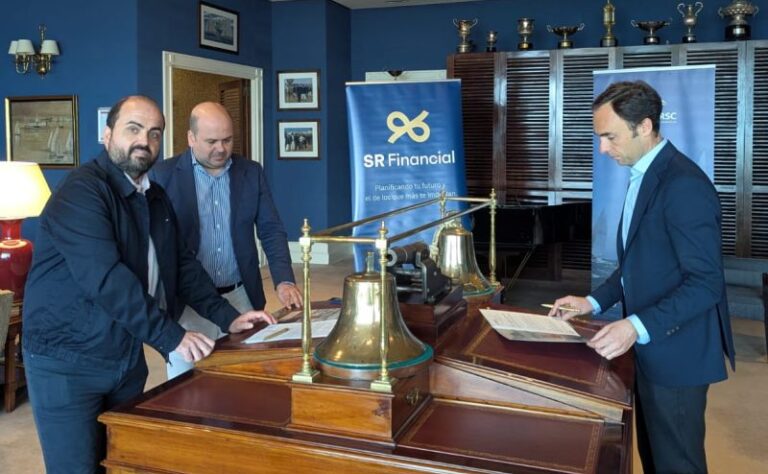
At the recent sports gala, we had the honor of presenting the career achievement award to Jonathan Castroviejo, an athlete whose career reflects consistency, discipline, and sustained growth at the highest competitive level.
Beyond athletic recognition, a solid career is always the result of sustained decisions over time, planning, structure, and vision… the same applies to the financial realm.
A career may be brilliant, but for that brilliance to translate into stability, it requires strategic guidance.
Honoring a career is not just about looking to the past; it is also about understanding how the future is built.
Financial literacy from grassroots levels
If we want to transform this reality, the conversation must not start when the athlete signs their first major contract, but rather when their competitive development begins.
Families, clubs, and technical staff play a fundamental role:
Introducing basic planning concepts.
Fostering responsible decision-making.
Normalizing professional guidance.
Talent is honed from an early age, and financial literacy should follow the same path.
Sport & Future: a structure, not a one-off initiative
At SR Financial, we understand that sports require a dedicated approach. It is not about applying standard solutions, but about designing strategies tailored to the unique nature of an athletic career.
Through our Sport & Future program, we operate along three fundamental lines:
Financial literacy in grassroots sports.
Wealth management tailored to professional athletes.
Structured planning for the career transition and second professional stage.
Our role is one of intermediation and specialized advisory, facilitating access to customized, structured solutions. Because wealth is not merely managed; it is safeguarded.
The future is not a consequence, it is a decision
The public and media recognition of the debate surrounding the economic future of sports is a positive sign. It indicates that the conversation is evolving.
However, the real difference does not lie in discussing the problem, but in acting with foresight. In sports, competing demands preparation; in finance, peace of mind demands planning. And both begin long before the decisive moment arrives.
If you wish to read the full article published in the press, you can do so here: 👉 Diario Deia Article
SR Financial
Your wealth is not merely managed; it is cared for.
Questions About Financial Planning in Sports
When is the best time to start?
From the moment you start managing your own money. Keeping a budget and setting savings goals helps you develop good habits before making more complex financial decisions.
What should you consider before choosing an investment?
Income and potential fluctuations, regular expenses, debts, short-term financial needs, and goals for life after your athletic career. When choosing financial products, it’s important to evaluate their terms and risks.
Financial Education Resource
Finance for Everyone: an activity to set financial goals.
General educational content. This does not constitute personalized investment advice. Editorial update: November 10, 2026.